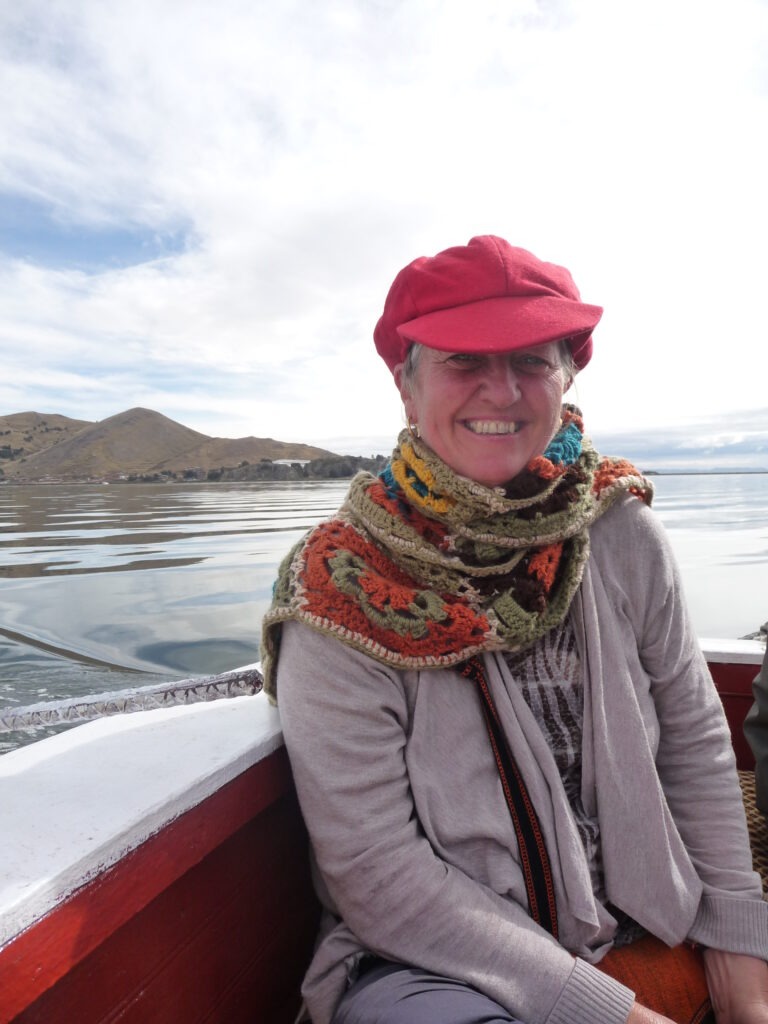
I live in South Somerset, where I grew up on a working farm. As a child, I spent long days on my pony, moving through fields and hedgerows. Landscape has always shaped how I think—about interdependence, adaptation, and the quiet intelligence of systems that must respond to changing conditions in order to survive.
After studying at the University of Exeter, I spent fifteen formative years in Australia. There, I established a training department for people with spinal cord injury and helped develop vocational rehabilitation services supporting return to work following injury, illness, or disability. My work took me across remote regions, from the Atherton Tablelands to the Snowy Mountains.
On the Tablelands, my territory covered more than 250,000 square miles. I was told that if I had an accident, I should radio the Flying Doctor from the set in the boot of my car—and if I broke down, light a fire by the roadside and put the kettle on.
Returning to England in the late 1990s, I founded and grew a vocational rehabilitation company that operated for more than fifteen years. The work supported thousands of individuals and contributed to European knowledge exchange projects across 14 countries. Alongside this, I served as a Trustee of my professional body and taught in higher education.
Those years shaped something fundamental: an understanding that distress rarely arises in isolation, but within wider systems—relational, social, economic, and environmental.
From 2010 onwards, this understanding led me towards training in trauma-informed practice, somatic approaches, and lineage-based traditions, alongside extended work with horses as teachers of non-verbal attunement and co-regulation. What drew me was not mysticism, but attention: how regulation spreads, how overload concentrates, and how meaning is made, transmitted, and sometimes imposed.
Between 2014 and 2017, I wrote three long-form narrative works exploring pilgrimage, seasonal ritual, and British mythic landscapes. These projects deepened my interest in the relationship between place, story, and the nervous system. In 2026, I completed the final two books in this body of work: Sin-eater and the Sin-eater Companion Guide.
Today, I am largely retired and enjoying a quieter pace of life, while continuing to undertake selected voluntary and occasional project work aligned with my interests.
Please also read:
I used to think I was choosing my path. Then I noticed the scaffolding.